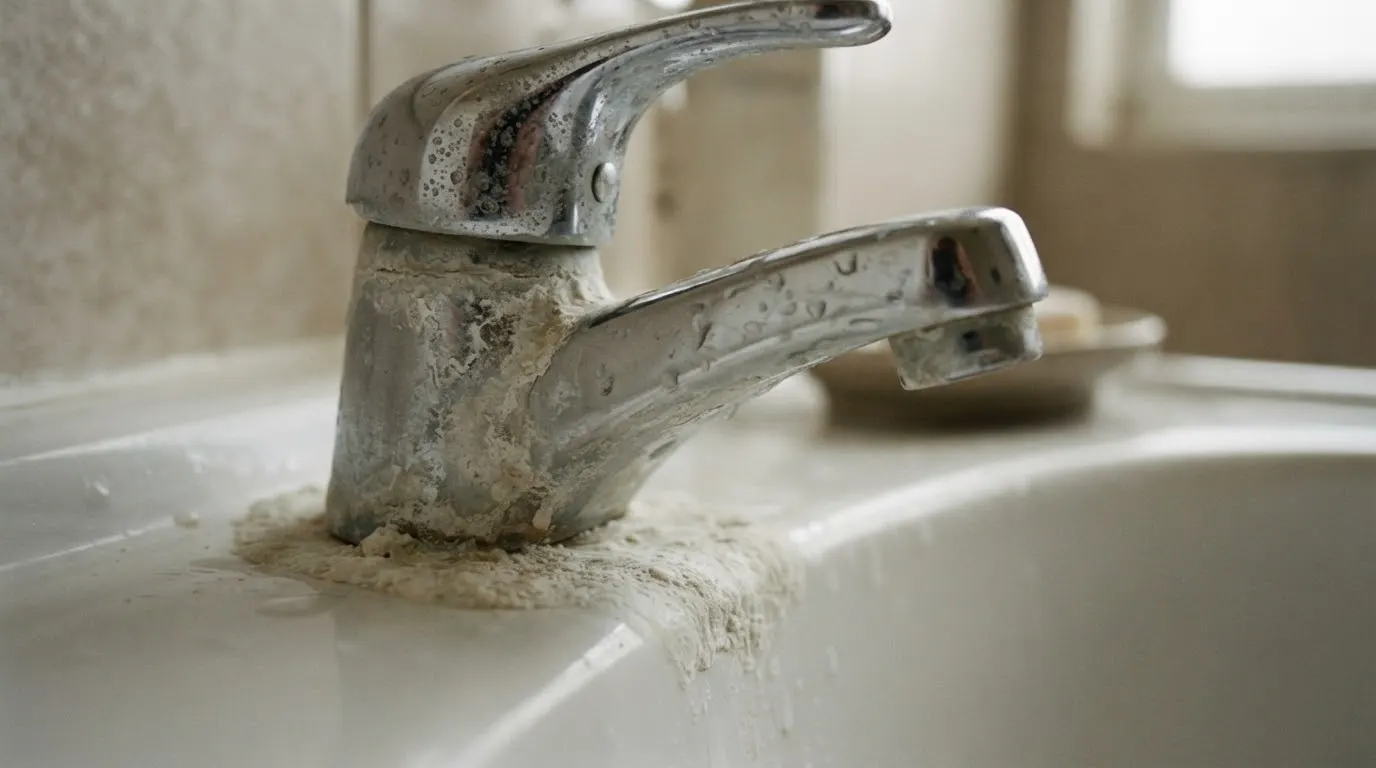
How hard is San Diego water?
City of San Diego treatment plants deliver water that lab summaries and city guidance place in the very hard range. Commonly cited figures run from roughly 12 to 18 grains per gallon depending on the plant, the season and your neighborhood, and anything above about 10.5 grains per gallon is generally classed as very hard. San Diego's supply is largely imported from the Colorado River and Northern California, both of which pick up dissolved calcium and magnesium along the way. Your own reading may differ, and the city's water quality lab can tell you the source for your address.
Hard water is not a health problem, but it is hard on plumbing.
What scale does inside a toilet
- Rim jets. The small holes under the rim that wash the bowl can clog with mineral deposits, so the flush becomes weak and the bowl does not clear.
- Siphon jet. The hole at the bottom of the bowl carries the flush surge. Scale narrows it and reduces flush power. If your toilet often needs two flushes, scale may be a cause. See flush valve and brand repair.
- Flapper and seat. Scale on the seal surface prevents a tight fit, causing the slow leak behind many running toilets. See running toilet repair.
- Fill valve. Mineral grit can clog the screen and jam the seals, producing slow filling, hissing, or constant running.
- Bowl staining. White or brown crust at the waterline is scale and iron staining, a look problem more than a function one.
Safe things you can do
- Clean the flapper seat. Turn off the water, flush to empty the tank, and wipe the flapper and seat.
- Clear the rim jets. Pour a cup or two of white vinegar into the overflow tube and let it sit for an hour, then flush. For heavier buildup, use a small mirror and a wire or a stiff brush to open the jets.
- Soak the bowl. Use a toilet-safe descaler, following the label, and never mix products. Do not combine vinegar with bleach or other cleaners.
- Skip tank tablets. Bleach-based tablets in the tank accelerate wear on rubber parts.
- Replace worn parts. A flapper and fill valve are inexpensive. Replacing them every several years is cheaper than paying for the extra water they leak.
Chloramine and rubber parts
San Diego's water is disinfected with chloramine. Many plumbers report that certain rubber and plastic parts age faster in chloraminated systems, and it is one reason we suggest replacing older flappers proactively. Manufacturers offer chloramine-resistant flappers that are worth choosing.
What about softeners?
A water softener removes calcium and magnesium and reduces scale throughout the home, including the toilet. It is a larger investment and a broader decision than a toilet repair, so weigh it on the benefits to your water heater, appliances and fixtures together.
When to call
- The toilet still flushes weakly after cleaning
- Running continues after a new flapper
- Crust has built up in the fill valve or you see leaks at the tank
See what a professional repair typically costs in the price guide. Older galvanized pipes, common in some North Park homes, can also be restricted by scale.